
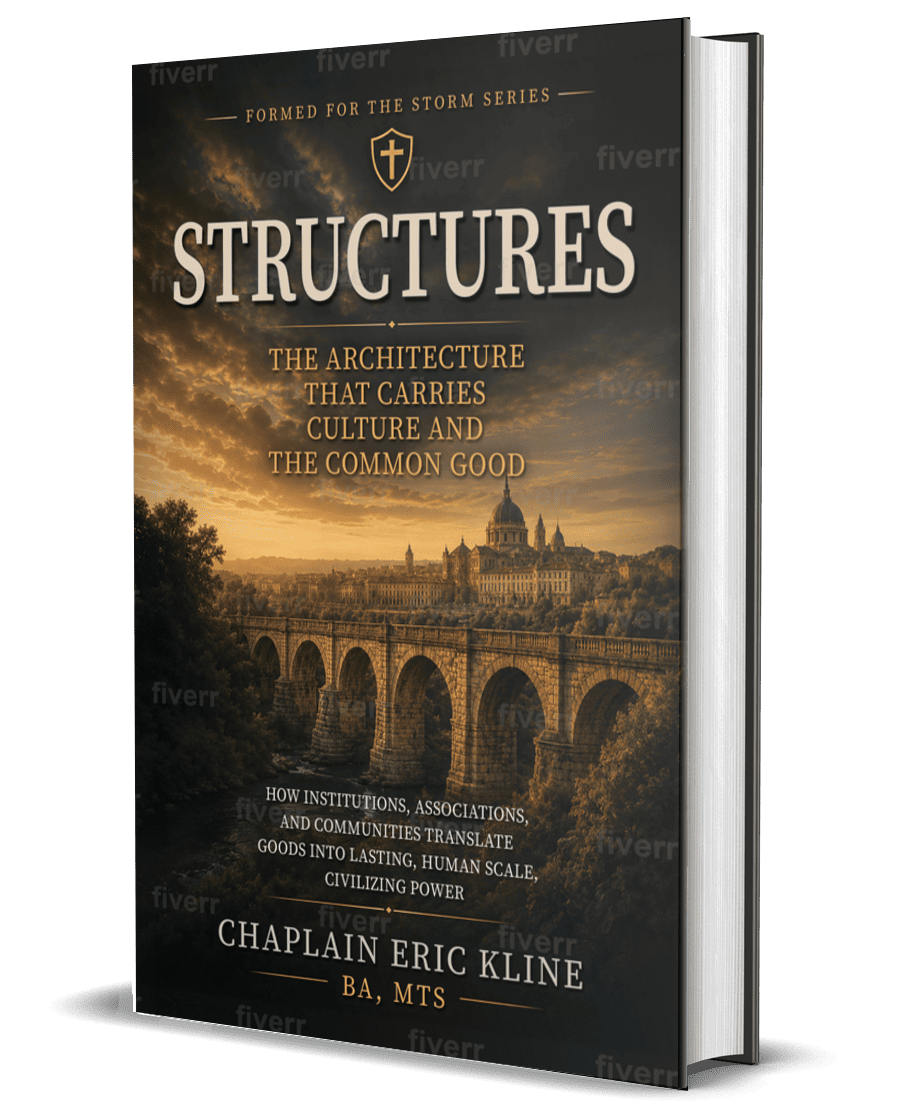
Book Synopsis

A storm does not create the weakness of a house. It reveals it.
The Structures We Still Need begins with that sober premise. In an age of economic pressure, V family instability, civic distrust, technological disruption, national debt, institutional fragility, and moral confusion, many Americans sense that something essential has become thin. We have more information, more choice, more mobility, and more expressive freedom than any previous generation. Yet many persons, households, churches, communities, and institutions feel less stable, less prepared, and less resilient.
This book asks what must be rebuilt before the next twenty years test us further.
Moving across five levels of human life-person, household, church and local community, institution, and nation-The Structures We Still Need offers a practical and moral framework for endurance. It examines the pressures already bearing down on American life: affordability, debt, demographic strain, technology, loneliness, public mistrust, weakening formation, and the loss of shared moral vocabulary. But it refuses both panic and passivity. The goal is not fear. The goal is faithful preparedness.
Drawing from history, theology, cultural analysis, and common sense, the book argues that resilience is not accidental. Persons need character. Families need covenantal stability. Churches need formation and courage. Institutions need mission, competence, and accountability. Nations need civic trust, fiscal sobriety, moral seriousness, and structures capable of bearing stress.
Where Goods Without Structure diagnoses the cultural habit of wanting benefits without foundations, The Structures We Still Need turns toward repair. It is a field guide for rebuilding what can still be rebuilt: not through utopian schemes, but through disciplined, local, faithful, practical action.
The storm may test the house. But a house can still be strengthened.