
Inquiry and Ideas
The Structures We Still Need

The Structures We Still Need offers a constructive response to the problem diagnosed in Goods Without Structure. If a culture values liberty, dignity, compassion, and belonging, what institutions and habits are needed to make those aspirations durable? This…
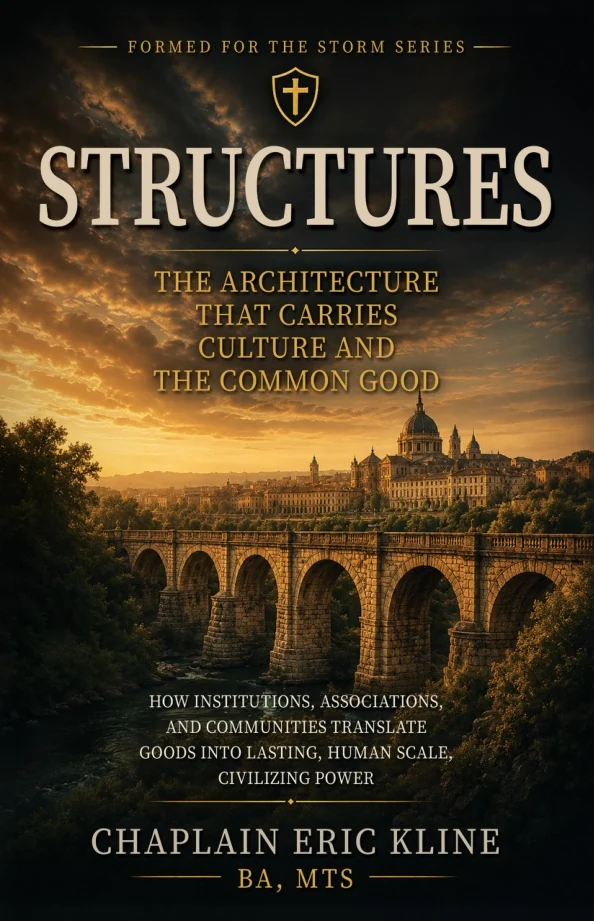
By Chaplain Eric Kline, BA, MTS
About this book
The Structures We Still Need offers a constructive response to the problem diagnosed in Goods Without Structure. If a culture values liberty, dignity, compassion, and belonging, what institutions and habits are needed to make those aspirations durable? This book turns from criticism toward the practical functions that families, associations, communities, and public institutions must perform if they are to support lives of responsibility and mutual care.
The focus is functional rather than nostalgic. An institution should not be defended merely because it is old, nor dismissed merely because it has failed in some respects. The book asks whether a form supports formation, stewardship, solidarity, accountability, and appropriate restraint—and whether an alternative can serve those ends better. It looks across interacting levels of communal life: individual habits, households, voluntary groups, civic organizations, and structures of governance. Norms must be learned in practice as well as declared in policy; institutions require maintenance, repair, incentives, and investment beyond the immediate generation.
Historical discussions, including Rome, Weimar, and the Soviet period, offer comparisons with limits rather than assertions that different eras follow identical trajectories. The argument is deliberately more constructive than a lament over decline. It invites readers, parents, educators, leaders, and civic participants to ask what must be protected, reformed, or rebuilt so that admirable social goods can endure. The paired books thus move from recognizing dependence on social structures to considering the difficult work of responsible institutional reconstruction.
Listen to the introduction
About the author
Eric Kline also writes under the name E. Vince.